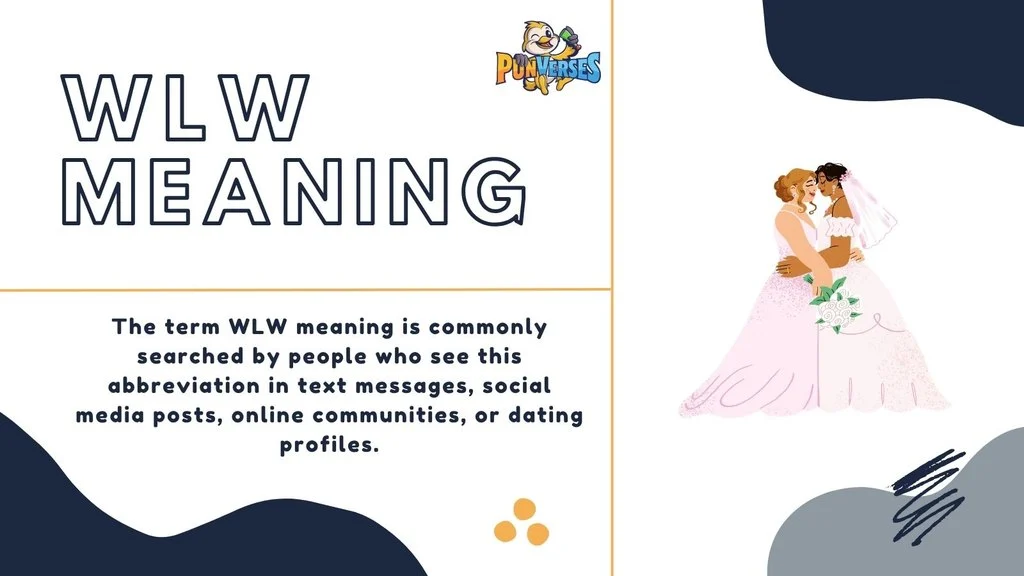
The term WLW meaning is commonly searched by people who see this abbreviation in text messages, social media posts, online communities, or dating profiles. WLW stands for “Women Loving Women.” It describes women who experience romantic or emotional attraction to other women. The term can include lesbians, bisexual women, pansexual women, and other women who are attracted to women.
WLW is popular on platforms such as Instagram, TikTok, WhatsApp, and dating apps because it offers a short, inclusive way to describe relationships and attraction. People also use it in hashtags, profile bios, discussions about LGBTQ+ identity, and posts celebrating love between women.
However, WLW does not automatically tell you someone’s exact sexual orientation or relationship status. It is a broad term that describes attraction and can be used by people with different identities.
Meaning and Definition of WLW
WLW stands for Women Loving Women. It is an umbrella term that describes romantic or emotional attraction between women. Depending on the context, it can refer to women who love women, relationships between women, or stories and communities centered on their experiences.
For example, someone might write, “I love finding good WLW movies.” This means they enjoy movies that feature romantic relationships between women.
The term is often used within LGBTQ+ communities because it allows people to discuss attraction without requiring everyone to identify with the same label.
Who can use the term WLW?
WLW may describe:
- Lesbian women: Women who are attracted to women.
- Bisexual women: Women who may experience attraction to women and other genders.
- Pansexual women: Women who can experience attraction regardless of gender.
- Other women attracted to women: People who prefer a broad description rather than a specific identity label.
Not everyone who experiences attraction to women uses the term WLW. Personal identity is individual, and people should be allowed to choose the labels that feel right for them.
Does WLW describe a relationship?
It can, but not always.
WLW may describe an individual identity, a romantic pairing, a fictional couple, or a general category of media. Someone can identify with WLW communities without currently dating anyone.
Example:
Person A: “That series has a great WLW storyline.”
Person B: “Yes, their relationship feels so realistic!”
In this exchange, WLW describes the type of romantic storyline rather than a particular person’s identity.
In simple terms, WLW is an inclusive abbreviation for women loving women, and its exact meaning depends on how it is used.
Background and Origin of WLW
WLW developed as a convenient abbreviation for “women loving women.” It is associated with online LGBTQ+ communities, where shorter expressions make it easier to discuss identity, relationships, representation, and shared experiences.
The exact point at which the abbreviation first appeared is difficult to establish. However, its use became especially familiar in online discussions, fandom communities, social media spaces, and conversations about LGBTQ+ representation.
Before short internet abbreviations became widespread, people often used longer expressions such as “women who love women” or “relationships between women.” WLW provides a shorter alternative that works well in hashtags, profile descriptions, discussion titles, and captions.
Why is WLW popular online?
There are several reasons for its popularity.
Inclusivity: WLW can include women with different sexual orientations without assigning them one specific identity.
Convenience: Three letters are easier to fit into a username, hashtag, or short social media caption than a longer phrase.
Community: The term helps people discover conversations, fictional characters, films, books, and other content involving relationships between women.
Representation: People use WLW when discussing whether movies, television shows, novels, and online stories portray women’s relationships thoughtfully.
WLW in modern culture
Today, WLW is often seen in discussions of romance novels, television series, fan fiction, celebrity representation, and dating experiences. It may appear alongside terms such as LGBTQ+, queer, lesbian, and sapphic.
For example, a reader might search for “WLW romance books” to find stories featuring romantic relationships between women.
Similarly, someone might use a WLW hashtag to help other people discover a video about a fictional couple or a personal experience.
The term is not limited to any particular age group, nationality, or online platform. Its meaning remains broadly connected to women loving women, although the tone and purpose can vary by community.
WLW Usage in Different Contexts
WLW can appear in casual conversations, social media posts, entertainment reviews, community discussions, and dating profiles. Understanding the surrounding sentence helps you determine whether someone is talking about personal identity, a romantic relationship, or a type of content.
In everyday conversations
People may use WLW when discussing attraction, relationships, or their interests.
Example:
“I recently started reading more WLW romance novels.”
This means the person is reading romantic stories centered on relationships between women.
Another example:
“My favorite show finally included a WLW couple.”
Here, the abbreviation describes a couple featured in the show.
In social media communities
WLW is frequently used to categorize content and connect people with similar interests. It can appear in captions, hashtags, video descriptions, and online discussions.
Examples include:
- “Sharing my favorite WLW characters.”
- “Looking for cute WLW book recommendations.”
- “This is one of my favorite WLW couples.”
- “More WLW representation, please!”
These examples generally refer to entertainment, relationships, or community interests rather than someone’s personal identity.
In professional and educational settings
WLW may appear in academic writing, LGBTQ+ inclusion discussions, media research, cultural studies, and workplace diversity conversations.
For example, a researcher might examine WLW representation in television or study how romantic relationships between women are portrayed in popular culture.
However, WLW is not a universal professional abbreviation. In formal documents, it is best to explain the term when it first appears, especially if the audience may be unfamiliar with LGBTQ+ terminology.
In personal profiles
Someone might include WLW in a dating profile or community bio to communicate their interests, identity, or the type of relationships they want to explore.
Still, the abbreviation alone does not reveal every detail about someone’s orientation, preferences, or relationship goals.
The key is to interpret WLW based on context rather than assuming it always describes the same personal situation.
WLW Meaning in Chat, WhatsApp, Instagram, and TikTok
In online messaging and social media, WLW generally keeps its usual meaning: Women Loving Women. It is not a separate abbreviation with a different definition on each platform.
The difference lies mainly in how people use it.
WLW meaning in chat
In a private conversation, someone might use WLW while talking about a relationship, a crush, or a television show.
Example:
Friend A: “Have you watched that new romantic series?”
Friend B: “Not yet. Is it WLW?”
Friend A is asking whether the series features a romantic relationship between women.
Another example:
“I need more WLW recommendations!”
This probably means the sender wants suggestions for books, movies, shows, or other content involving women-loving-women themes.
WLW meaning on WhatsApp
On WhatsApp, WLW can appear in private messages, group chats, status updates, or shared links.
Examples:
- “This movie is perfect for WLW romance fans.”
- “Do you know any good WLW books?”
- “I saw a WLW couple in that show!”
The abbreviation is usually understood from the conversation. If the recipient is unfamiliar with it, a short explanation can clear up the confusion.
WLW meaning on Instagram
Instagram users may include WLW in captions, bios, Reels, hashtags, and fan pages.
For example, a post about two fictional female characters might include a caption discussing their WLW romance.
People also use the term to find artwork, book recommendations, relationship discussions, and LGBTQ+ representation.
WLW meaning on TikTok
On TikTok, WLW often appears in videos about fictional couples, dating experiences, romance recommendations, humor, and LGBTQ+ culture.
For example:
“POV: You found another WLW romance with a happy ending.”
This caption refers to a romantic story featuring women who love women.
Remember: WLW usually has the same core definition across chat, WhatsApp, Instagram, and TikTok. The surrounding content tells you whether it refers to a person, a couple, a story, or a community.
WLW Meaning in Physics, Medical, and Aircraft Terminology
Although WLW is widely recognized in online LGBTQ+ conversations, abbreviations can have different meanings in specialized fields. This is why context matters when interpreting unfamiliar letters.
WLW meaning in physics
WLW is not a universally standard physics abbreviation with one widely accepted definition. Its meaning, if used, depends on the specific paper, formula, laboratory notes, or technical document.
Physics commonly uses abbreviations and symbols for quantities such as wavelength, angular frequency, and wave functions. However, you should not assume that WLW refers to one of these concepts without evidence from the source.
If you encounter WLW in a physics textbook or research paper, check the glossary, surrounding equations, and definitions provided by the author.
WLW meaning in medical terminology
WLW is not a universally standardized medical abbreviation with one fixed meaning across all specialties.
Medical abbreviations can vary between hospitals, research publications, and clinical settings. An unfamiliar abbreviation should therefore be interpreted using the document’s context rather than a general internet definition.
If WLW appears in a medical report, ask the healthcare professional or author to clarify it instead of guessing what it means.
This is particularly important when interpreting clinical notes, test results, or instructions related to patient care.
WLW meaning in aircraft terminology
WLW is not a universally recognized aircraft abbreviation with one established meaning across aviation.
Aircraft manuals, maintenance records, flight documents, and technical reports often use specialized abbreviations. Their meanings may depend on the aircraft model, manufacturer, or aviation authority.
If you encounter WLW in an aviation document, consult the relevant manual’s abbreviation list or the organization that produced the document.
How can you identify the correct meaning?
Use these simple steps:
- Identify where the abbreviation appears.
- Read the sentence before and after it.
- Check whether the source provides a glossary.
- Look for a field-specific definition.
- Ask the author or relevant professional if the meaning remains unclear.
In a social media conversation, WLW most commonly means Women Loving Women. In a technical document, you should verify the meaning rather than automatically applying the social media definition.
Common Misconceptions About WLW
Although WLW is a straightforward abbreviation, people sometimes misunderstand what it communicates.
Misconception: WLW means lesbian only
This is incorrect. WLW is an umbrella term that may include lesbians, bisexual women, pansexual women, and other women attracted to women.
The term does not require everyone to use the same sexual identity label.
Misconception: Every WLW person is dating a woman
Not necessarily. Someone may identify with the term while being single, taking a break from dating, or not looking for a relationship.
Attraction and current relationship status are different things.
Misconception: WLW always describes real people
WLW can describe real relationships, but it is also widely used for fictional characters, books, movies, television shows, and fan-created stories.
For example, a person who enjoys WLW fiction is not automatically revealing their own sexual orientation.
Misconception: WLW is an offensive term
WLW is generally a neutral, inclusive abbreviation. However, the way any identity-related term is used can affect how it is received.
Using it respectfully to discuss attraction, identity, or representation is different from using it to mock or stereotype people.
Misconception: WLW reveals someone’s complete identity
The abbreviation does not tell you everything about a person. It does not automatically identify their specific orientation, pronouns, dating preferences, or relationship status.
If someone chooses to share more information about themselves, listen to the words they use.
Misconception: WLW has exactly the same meaning in every field
Context matters. Although Women Loving Women is the common online meaning, a specialized document may use the same letters differently.
The safest approach is to interpret the abbreviation based on the surrounding conversation or document.
Similar Terms and Alternatives to WLW
Several terms are related to WLW, but they are not completely interchangeable. Each has its own meaning and may suit a different situation.
| Term | Meaning | Main distinction |
|---|---|---|
| WLW | Women Loving Women | Broad term for women attracted to women |
| Lesbian | A woman who is attracted to women | A specific sexual orientation |
| Sapphic | Relating to women who love women | Often used in cultural, romantic, and literary contexts |
| MLM | Men Loving Men | Broad term for men attracted to men |
| LGBTQ+ | Lesbian, Gay, Bisexual, Transgender, Queer, and other identities | Broad community and identity umbrella |
| Queer | An inclusive identity term used by many people | Personal preference matters; not everyone uses it |
| Bisexual | Attraction to more than one gender | Does not necessarily mean equal attraction to every gender |
| GL | Girls’ Love | A label commonly used for romance media featuring female characters |
WLW vs. lesbian
Lesbian is a specific identity label, while WLW can include women with several different sexual orientations.
For instance, a bisexual woman who dates another woman may describe the relationship as WLW without identifying as a lesbian.
WLW vs. sapphic
Sapphic is closely related to WLW and often appears in discussions of books, art, romance, and culture. Some people prefer one term over the other.
WLW explicitly refers to women loving women, while sapphic can function as a broader cultural or descriptive term.
WLW vs. MLM
These terms describe different forms of attraction. WLW refers to women loving women, while MLM refers to men loving men.
Both are umbrella expressions that can be used when discussing identities, relationships, and romantic media.
WLW vs. LGBTQ+
WLW focuses specifically on women who love women. LGBTQ+ encompasses a wider range of sexual orientations and gender identities.
Choosing the right term depends on what you want to communicate.
How to Respond When Someone Uses WLW
Your response should depend on what the other person means. Sometimes they are asking about a movie, while other times they may be sharing something personal.
You do not need to make the conversation complicated. A simple, respectful reply is usually enough.
If someone asks whether you know the meaning
You can respond:
- “It means Women Loving Women.”
- “It’s a term for women who are romantically attracted to women.”
- “It’s often used in LGBTQ+ conversations and romance communities.”
These answers are clear without making assumptions about anyone.
If someone recommends WLW movies or books
You could say:
- “Sounds interesting! Which one should I try first?”
- “Do you have any favorite recommendations?”
- “I haven’t watched that one yet. Is the storyline good?”
These responses keep the conversation focused on the content.
If someone uses WLW to describe themselves
If a person shares something about their identity, you can respond with kindness.
Examples include:
- “Thanks for sharing that with me.”
- “I appreciate you telling me.”
- “I’m happy you feel comfortable talking about it.”
You do not have to ask personal questions unless they invite that conversation.
If you are unsure what they mean
It is perfectly acceptable to ask:
“Just checking, do you mean Women Loving Women?”
This is a useful option when the abbreviation appears in an unfamiliar context.
What should you avoid?
Avoid making jokes about someone’s identity, assuming their orientation, or asking intrusive questions. If the discussion concerns another person’s private life, respect their boundaries.
The best response is one that matches the conversation and treats everyone with respect.
Differences Between WLW and Other Common Abbreviations
WLW may appear alongside several other internet abbreviations. Understanding the differences helps you avoid confusing unrelated terms.
WLW vs. WLM
WLW generally stands for Women Loving Women.
WLM is sometimes used online to mean “Women Loving Men,” but abbreviations can vary by community. Always check the context before assuming a particular expansion.
WLW vs. W4W
W4W is commonly used in personal ads or online dating to mean “woman for woman” or “women for women.” It often communicates that someone is seeking a woman.
WLW is broader and can describe attraction, relationships, or media without necessarily indicating that someone is looking for a date.
WLW vs. GL
GL stands for “Girls’ Love” in many entertainment and fandom contexts. It commonly labels romance stories featuring female characters, particularly in some Asian media markets.
WLW is a broader expression used in conversations about real people, relationships, and fictional stories.
WLW vs. LGBTQ+
WLW describes a specific category of attraction. LGBTQ+ refers to a broader range of identities and communities.
These terms may appear together, but they do not mean the same thing.
Why these differences matter
Online abbreviations are convenient, but they can become confusing when people assume that related expressions are identical.
When in doubt, read the entire message and consider the platform. A dating profile, a book review, and an academic article may use abbreviations differently.
WLW in Online Conversations and Dating Apps
WLW is particularly useful in online spaces because it helps people communicate shared interests and discover relevant content quickly.
Finding romantic content
People search for WLW romance when they want books, movies, television shows, or stories featuring relationships between women.
The term can also help readers find recommendations that reflect the kinds of relationships they want to see represented in fiction.
Connecting with communities
On social media, WLW hashtags can help users discover creators, discussions, artwork, and personal stories. Community members may share experiences, offer advice, or discuss representation in entertainment.
However, not every post using the term represents a person’s own identity. Some users are simply discussing media or supporting LGBTQ+ representation.
Understanding dating profiles
On dating apps, WLW may appear in bios, interest descriptions, or conversations about dating preferences.
For example, a profile might mention an interest in WLW romance novels or describe itself as part of a WLW community.
The abbreviation alone does not tell you whether the person is seeking a serious relationship, casual dating, friendship, or something else. Those details need to be communicated separately.
Starting a conversation
If someone mentions WLW in their profile, you can begin with a friendly question about a shared interest.
For example:
“I noticed you enjoy WLW romance. Have you read any books you’d recommend?”
This opens a conversation without assuming the person’s orientation or relationship goals.
Respect, privacy, and boundaries
Online identity discussions should always be handled respectfully. Do not assume that someone wants to discuss their personal life simply because they use an LGBTQ+ term.
Likewise, avoid sharing another person’s identity or private messages without permission.
Ultimately, WLW can make it easier to find relevant communities and discuss attraction, but meaningful communication still depends on honesty, respect, and clear boundaries.
FAQs:
What does WLW mean in slang?
WLW stands for “Women Loving Women.” It describes women who feel romantic or sexual attraction to other women. The term is commonly used on social media, in online communities, and in LGBTQ+ discussions.
Is WLW only for lesbians?
No, WLW is not only for lesbians. It can include lesbians, bisexual women, pansexual women, and other women who are attracted to women. The term describes attraction rather than one specific sexual orientation.
What is bambisexual?
Bambisexual is an informal term sometimes used in LGBTQ+ communities, particularly among people who prefer romantic affection, cuddling, and emotional intimacy over sexual activity. Its meaning can vary by person and community, so it is best to ask someone what they mean when they use the label.
What is MLM and MLW?
MLM usually stands for “Men Loving Men,” describing men who are romantically or sexually attracted to other men. MLW stands for “Men Loving Women,” describing men who are attracted to women. Both abbreviations are used in online discussions about relationships and sexual orientation.
Conclusion:
Understanding WLW meaning makes online conversations, social media posts, and dating profiles easier to interpret. WLW stands for Women Loving Women and is an inclusive term commonly used to describe women who experience romantic or emotional attraction to other women. It can include lesbians, bisexual women, pansexual women, and others who identify with the term.
You may see WLW on WhatsApp, Instagram, TikTok, dating apps, book recommendation pages, and entertainment discussions. Its meaning usually remains the same across these platforms, although the context determines whether it refers to a person, a relationship, a fictional couple, or a community.
It is also important to distinguish WLW from related terms such as lesbian, sapphic, MLM, and LGBTQ+. These expressions overlap in some situations but do not have identical meanings. When you encounter an unfamiliar abbreviation in a technical or professional document, check its specific context rather than guessing.
Most importantly, use identity related language respectfully and avoid making assumptions about other people. A little context can make online communication clearer, kinder, and more meaningful.